Dashboard Warning Lights: Complete UK Guide
Every dashboard warning light explained for UK drivers — what it means, whether to stop immediately, common causes, UK repair costs, and whether it affects your MOT.
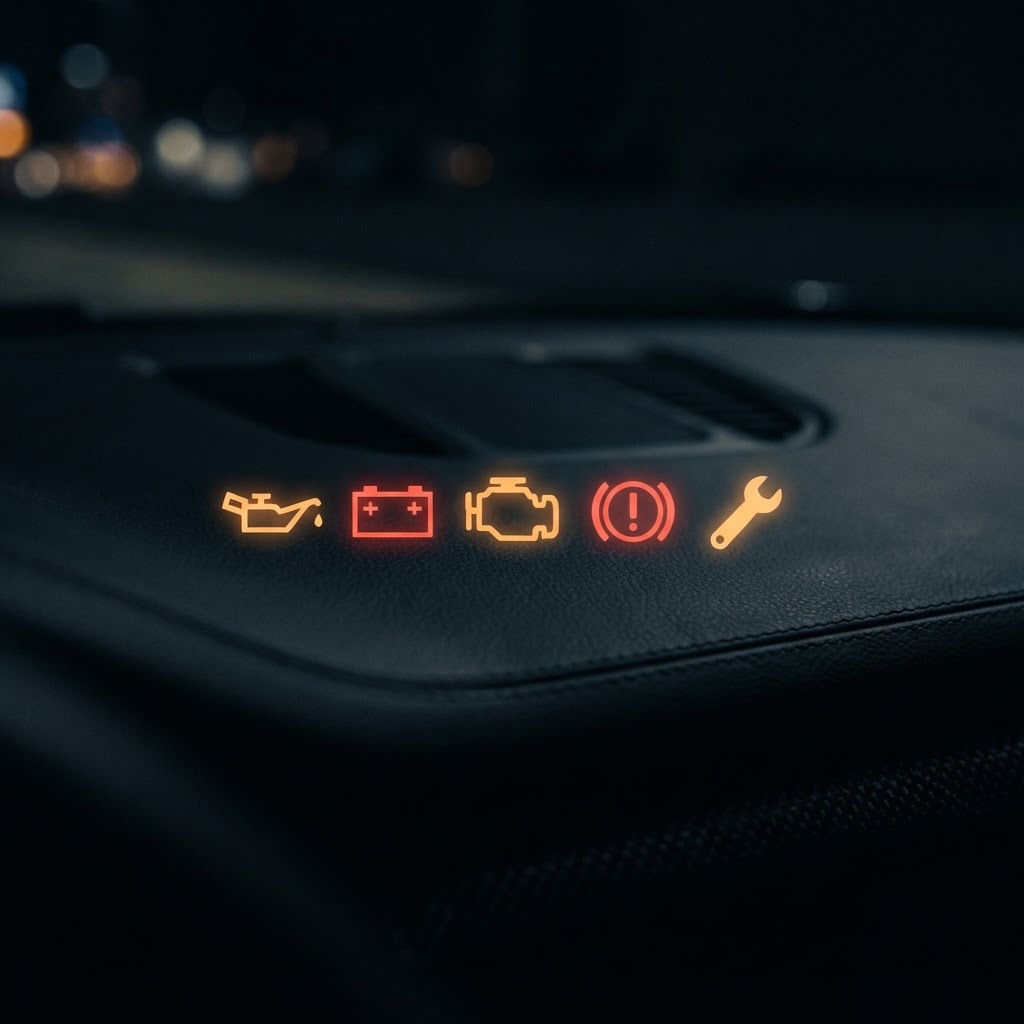
🚨 Stop Immediately — Emergency Warnings
These require pulling over safely without delay. Continued driving risks serious damage or safety failure.
Engine Oil Pressure
Stop immediately. Risk of catastrophic engine damage.
Full guideEngine Overheating
Stop safely. Continued driving risks head gasket failure.
Full guideBattery / Charging
Drive carefully to garage. You have limited time.
Full guideBrake System
Stop carefully. Check brake fluid. Do not drive further.
Full guideEngine Management (Flashing)
Stop. Active misfiring destroys catalytic converter.
Full guide🟡 Caution & Advisory Warnings
Not immediate emergencies, but require investigation and booking within days — not weeks.
All Warning Lights — Full Directory
Every dashboard warning light covered on MotR with a full explanation, repair costs, and MOT guidance.
Engine Oil Warning
STOPBattery Warning
CAUTIONCheck Engine / EML
CAUTIONService Light
ADVISORYGlow Plug (Diesel)
CAUTIONTPMS / Tyre Pressure
CAUTIONAutomatic Gearbox
CAUTIONHybrid System
CAUTIONStart-Stop System
ADVISORYElectric Power Steering
CAUTIONBrake Pad Warning
CAUTIONABS Warning
CAUTIONAirbag Warning
CAUTIONDPF Warning (Diesel)
CAUTIONCoolant Temperature
STOPEPC Warning (VW Group)
CAUTIONAdBlue Warning
ADVISORYOil Pressure Warning
STOPTraction Control
ADVISORYPower Steering Warning
CAUTIONWarning Lights & Your MOT
Automatic MOT Failure
Warning Light Severity at a Glance
| Warning Light | Colour | Severity | Can You Drive? | MOT Risk | Action |
|---|---|---|---|---|---|
| Engine Oil Pressure | 🔴 Red | STOP | No — stop immediately | Auto-fail | Pull over, turn off engine |
| Engine Overheating | 🔴 Red | STOP | No — stop safely | Auto-fail | Stop, let engine cool |
| Brake System | 🔴 Red | STOP | No — check fluid first | Auto-fail | Check fluid, call garage |
| Engine Management (flashing) | 🟡 Amber | STOP | No — active misfire | Auto-fail | Stop, prevent cat damage |
| Battery / Charging | 🔴 Red | CAUTION | Limited — drive to garage | Auto-fail | Drive directly to garage |
| Engine Management (steady) | 🟡 Amber | CAUTION | Yes — with care | Auto-fail | Book diagnostic scan |
| ABS Warning | 🟡 Amber | CAUTION | Yes — brakes still work | Auto-fail | Book garage promptly |
| Airbag / SRS | 🟡 Amber | CAUTION | Yes — airbags inactive | Auto-fail | Book garage — safety risk |
| Tyre Pressure (TPMS) | 🟡 Amber | CAUTION | Yes — check pressures | Auto-fail | Check & inflate tyres |
| Brake Pad Warning | 🟡 Amber | ADVISORY | Yes — briefly | Auto-fail | Replace pads within days |
| Service Due | 🔵 Blue/Amber | ADVISORY | Yes | Auto-fail if lit at test | Book service within weeks |
| AdBlue (diesel) | 🟡 Amber | ADVISORY | Yes — until empty | Auto-fail | Top up AdBlue fluid |
Any illuminated warning light at the time of MOT test is an automatic failure under the 2018 DVSA test rules. Resolve all warnings before booking.
Frequently Asked Questions
What is the most serious dashboard warning light?
Can a dashboard warning light fail an MOT?
What is the difference between red and amber warning lights?
Can I clear a warning light by disconnecting the battery?
What should I do if multiple warning lights come on at once?
How much does it cost to get dashboard warning lights diagnosed?
What does a flashing warning light mean compared to a steady one?
Can I drive with more than one warning light on at the same time?
How long does a dashboard warning light diagnostic take?
Is it safe to drive with the service due light on?
Related Tools & Resources
MOT Guide
Complete MOT reference
OpenMOT History Checker
Free DVSA record lookup
OpenMOT Failures Hub
Common failure categories
OpenCheck If Car Insured
Insurance status check
OpenVehicle Tax Check
Tax and SORN status
OpenUsed Car Buying Guide
Pre-purchase checks
OpenCar Problems Guide
Diagnose common issues
OpenMOT Advisories Explained
What advisories mean
OpenCar Maintenance Guide
Full servicing & upkeep guide
OpenVehicle Report
Full DVLA vehicle details lookup
OpenWarning-light guidance is general UK advice. Any illuminated warning light at the time of the MOT test is an automatic failure under the 2018 DVSA test rules. MotR is not affiliated with DVLA, DVSA or any vehicle manufacturer. Last reviewed 14 June 2026.