ABS Warning Light
Your standard brakes still work — but your anti-lock braking system has been disabled. Here's what causes it, whether you can legally drive, and what it costs to repair.
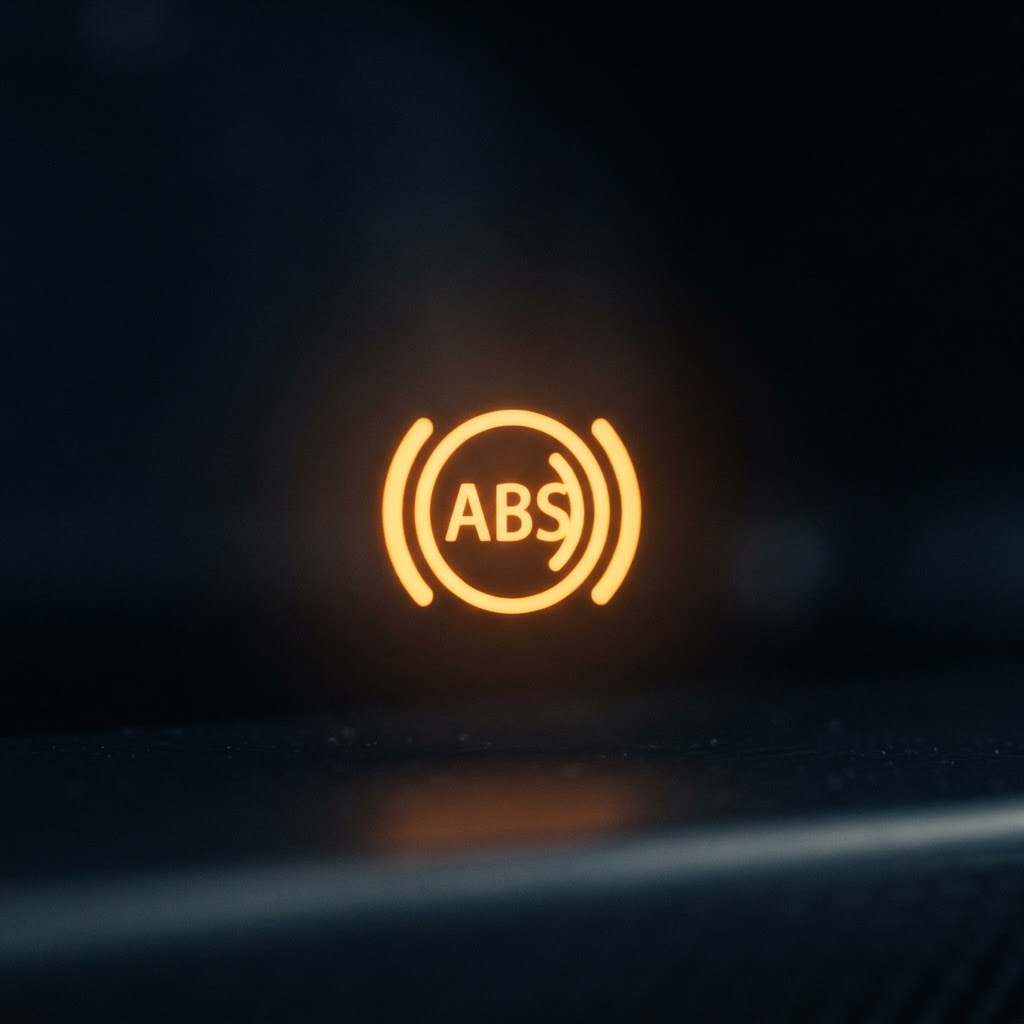
What This Warning Light Means
The ABS warning light means the Anti-Lock Braking System has detected a fault and has disabled itself. ABS prevents your wheels from locking during heavy braking, maintaining steering control and reducing stopping distances on slippery surfaces. With ABS off, your brakes still work normally for routine braking — but in an emergency stop, you risk wheel lock-up and loss of steering control. This is particularly dangerous in wet or icy conditions.
How Serious Is It — and What To Do
🟡 Drive with Caution
You can drive to a garage, but understand that your ABS is not functioning. Avoid high speeds, increase following distances significantly, and be particularly careful on wet, loose, or icy road surfaces. Emergency stops could result in wheel lockup and loss of directional control.
Can drive with caution
Standard braking is unaffected. You should drive cautiously to a garage and have the fault diagnosed and repaired promptly. Avoid heavy braking situations where possible. If the ABS light is accompanied by the brake warning light, stop driving immediately — this indicates a more serious brake system fault.
Stop immediately if…
Common Causes
Can It Fail an MOT?
🔍 MOT Implications
Typical UK Repair Costs
| Issue | Likelihood | Est. UK cost | DIY? |
|---|---|---|---|
| Faulty Wheel Speed Sensor | Most Common — accounts for 60–70% of ABS faults | Sensor replacement: £80–£200 per sensor (parts and labour). Some vehicles require hub bearing removal for access, increasing cost. | Pro |
| Damaged Sensor Wiring or Connector | Common — especially on older vehicles | Wiring repair: £60–£200 depending on extent of damage | Pro |
| Damaged Reluctor Ring | Common on older vehicles | Ring replacement: £100–£300. If integrated into bearing, full bearing replacement: £150–£400 | Pro |
| ABS Modulator/Pump Failure | Less Common — more expensive repair | ABS modulator replacement: £400–£1,200 (remanufactured units available at lower cost) | Pro |
| ABS Control Module Fault | Less Common | Repair specialist: £150–£350. Main dealer replacement: £600–£1,500 | Pro |
Costs are estimates based on UK independent garages. Main dealer prices may be higher.
Common Fixes in Detail
Faulty Wheel Speed SensorMost Common — accounts for 60–70% of ABS faults
Each wheel has a speed sensor that monitors wheel rotation and sends signals to the ABS module. These sensors are exposed to road debris, water, and salt corrosion. A failed sensor sends an incorrect or absent signal, triggering the ABS light. Diagnosis requires a diagnostic scanner to identify which wheel sensor is at fault.
Sensor replacement: £80–£200 per sensor (parts and labour). Some vehicles require hub bearing removal for access, increasing cost.
Professional repair required
Damaged Sensor Wiring or ConnectorCommon — especially on older vehicles
The wiring harness to each wheel speed sensor runs near the wheel and is subject to flexing, abrasion, and corrosion over time. A break or corroded connector in the wiring generates the same fault code as a failed sensor. Visual inspection of the wiring can identify obvious damage.
Wiring repair: £60–£200 depending on extent of damage
Professional repair required
Damaged Reluctor RingCommon on older vehicles
The reluctor (tone) ring is a toothed ring attached to the wheel hub or driveshaft. The ABS sensor reads the passing teeth to calculate wheel speed. If the ring is corroded, chipped, or has debris stuck to it, the sensor generates erratic readings. On many modern vehicles, the reluctor ring is integrated into the wheel bearing.
Ring replacement: £100–£300. If integrated into bearing, full bearing replacement: £150–£400
Professional repair required
ABS Modulator/Pump FailureLess Common — more expensive repair
The ABS hydraulic modulator controls brake fluid pressure to individual wheels during an ABS event. If the modulator fails, ABS is disabled entirely. Replacement is significant labour, particularly on vehicles where the modulator is integrated into the brake master cylinder assembly.
ABS modulator replacement: £400–£1,200 (remanufactured units available at lower cost)
Professional repair required
ABS Control Module FaultLess Common
The ABS ECU itself can fail, often due to water ingress or corrosion. In some cases, the module can be repaired or reprogrammed by a specialist; in others, replacement and coding is required. Using a specialist ABS module repairer can significantly reduce costs versus main dealer replacement.
Repair specialist: £150–£350. Main dealer replacement: £600–£1,500
Professional repair required
Ownership & Maintenance
Long-Term Impact
Good Habits
Recurring Issues
Vehicle Health
Frequently Asked Questions
Can I still brake with the ABS light on?
Can I drive to an MOT centre with the ABS light on?
Will disconnecting the battery reset the ABS light?
How do I know which ABS sensor has failed?
How much does an ABS sensor cost?
My ABS light came on in cold weather and then went off — is it fixed?
Related Tools & Resources
Warning-light guidance is general UK advice and does not confirm manufacturer-specific behaviour — always check your vehicle handbook. Any illuminated warning light at the time of the MOT test is an automatic failure under the 2018 DVSA rules. MotR is not affiliated with DVLA, DVSA or any vehicle manufacturer. Last reviewed June 2026.