Oil Pressure Warning Light
The red oil can with a drip underneath is your engine telling you it's running out of lubrication. This guide explains every possible cause and what it costs to fix in the UK.
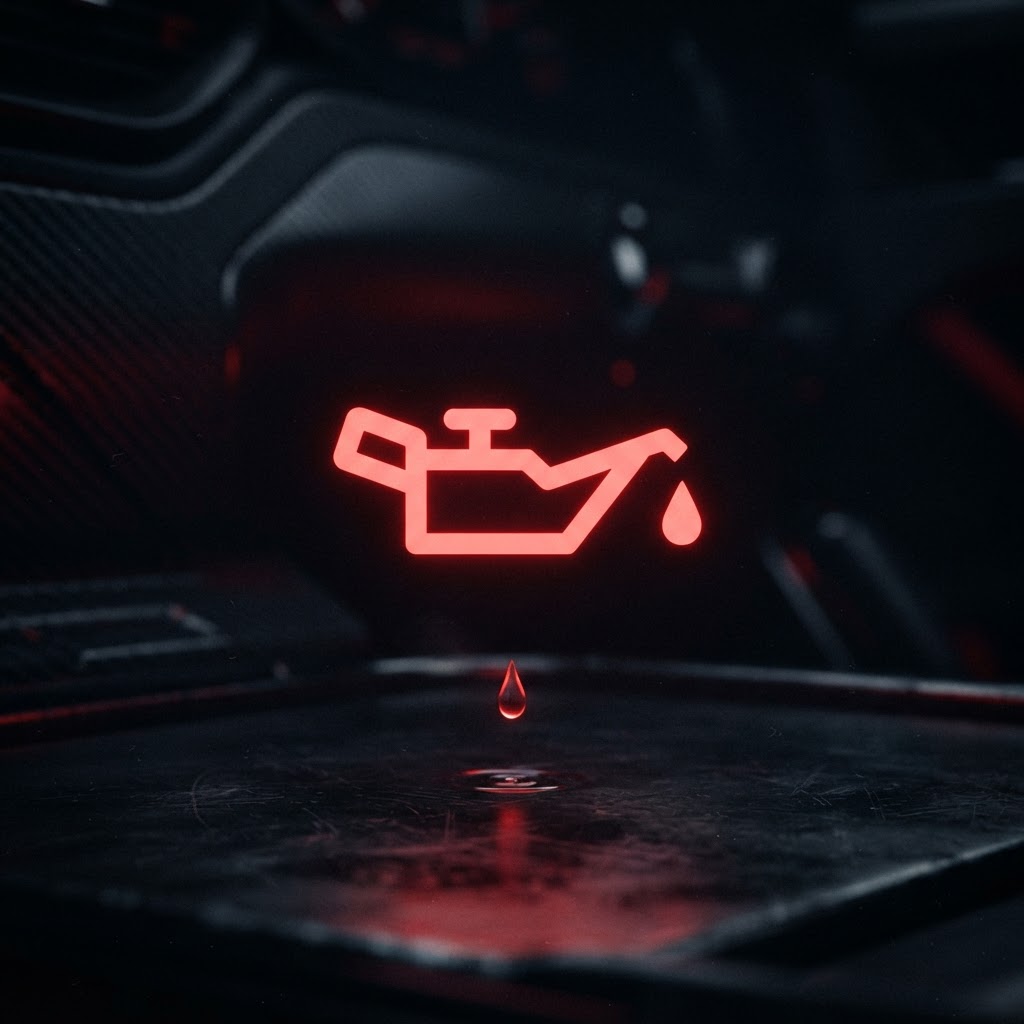
What This Warning Light Means
The oil pressure warning light illuminates when the engine's oil pressure drops below the minimum safe threshold — typically between 7 and 10 PSI. Without adequate pressure, oil cannot reach the camshaft, crankshaft, bearings, and cylinder walls fast enough to prevent metal-on-metal contact. Engine damage can occur within 30–60 seconds of pressure loss at operating temperature.
How Serious Is It — and What To Do
🔴 Stop Immediately — Engine at Risk
This is a critical failure warning. Unlike advisory lights, low oil pressure can destroy an engine in under a minute at full operating temperature. Stop the vehicle safely, switch off the ignition, and do not restart without identifying the cause.
Do not drive
Stop immediately. Even if the car feels fine and drives normally, the damage happening inside the engine is invisible. Pull over on the left, engage the handbrake, switch off. Check the oil level. If normal, do not restart. Call a breakdown service.
Stop immediately if…
Common Causes
Can It Fail an MOT?
🔍 MOT Implications
Typical UK Repair Costs
| Issue | Likelihood | Est. UK cost | DIY? |
|---|---|---|---|
| Low Oil Level — Below Pickup Point | Very Common | Oil top-up: £8–£20. Full service including investigation of why oil is low: £80–£150 | Yes |
| Failed Oil Pressure Sensor/Switch | Common — particularly on vehicles over 5 years old | Parts and labour: £50–£130 | Pro |
| Sludged Oil Galleries | Less Common — engines with missed or infrequent oil changes | Engine flush: £50–£100. Gallery cleaning: £500–£2,000+ depending on severity | Pro |
| Worn Oil Pump | Less Common — higher mileage engines | £350–£900 including labour | Pro |
| Worn Crankshaft or Camshaft Bearings | Indicates high mileage or oil neglect | Short engine replacement or rebuild: £1,500–£5,000+ | Pro |
Costs are estimates based on UK independent garages. Main dealer prices may be higher.
Common Fixes in Detail
Low Oil Level — Below Pickup PointVery Common
If the oil level has dropped below the minimum marking and the sump pickup tube can't draw oil, pressure drops immediately. Top up with the manufacturer-specified grade. On a flat road, check the dipstick after 5 minutes with the engine off. Oil should read between min and max.
Oil top-up: £8–£20. Full service including investigation of why oil is low: £80–£150
DIY possible
Failed Oil Pressure Sensor/SwitchCommon — particularly on vehicles over 5 years old
The oil pressure switch is a simple electromechanical component that fails fairly often. Before condemning it, a mechanic must measure actual oil pressure using a mechanical gauge screwed into the sensor port. If pressure is correct but the light is on, the sensor is faulty.
Parts and labour: £50–£130
Professional repair required
Sludged Oil GalleriesLess Common — engines with missed or infrequent oil changes
Repeated missed oil services cause old degraded oil to polymerize into a thick sludge that blocks internal galleries. This restricts oil flow to critical components. An engine flush may partially help; severe cases require dismantling to clear passages. Prevention is the only reliable cure.
Engine flush: £50–£100. Gallery cleaning: £500–£2,000+ depending on severity
Professional repair required
Worn Oil PumpLess Common — higher mileage engines
The gear-type or rotor-type oil pump wears over time, reducing the volume and pressure of oil it can deliver. Replacement requires removing the sump and is fairly labour-intensive. Often worth considering the overall condition of the engine before committing to the repair.
£350–£900 including labour
Professional repair required
Worn Crankshaft or Camshaft BearingsIndicates high mileage or oil neglect
Bearing journals wear over time, increasing the clearance through which oil can escape. When clearances become excessive, the oil pump cannot maintain pressure regardless of output. This is a major engine rebuild situation.
Short engine replacement or rebuild: £1,500–£5,000+
Professional repair required
Ownership & Maintenance
Long-Term Impact
Good Habits
Recurring Issues
Vehicle Health
Frequently Asked Questions
Is the oil pressure light the same as the oil level light?
The oil pressure light came on, I topped up the oil, and it went out. Am I safe?
How do mechanics test oil pressure?
Can I add oil pressure additives to fix low oil pressure?
My car is a diesel with a turbo — is low oil pressure more serious?
Will low oil pressure fail an MOT?
Related Tools & Resources
Warning-light guidance is general UK advice and does not confirm manufacturer-specific behaviour — always check your vehicle handbook. Any illuminated warning light at the time of the MOT test is an automatic failure under the 2018 DVSA rules. MotR is not affiliated with DVLA, DVSA or any vehicle manufacturer. Last reviewed June 2026.