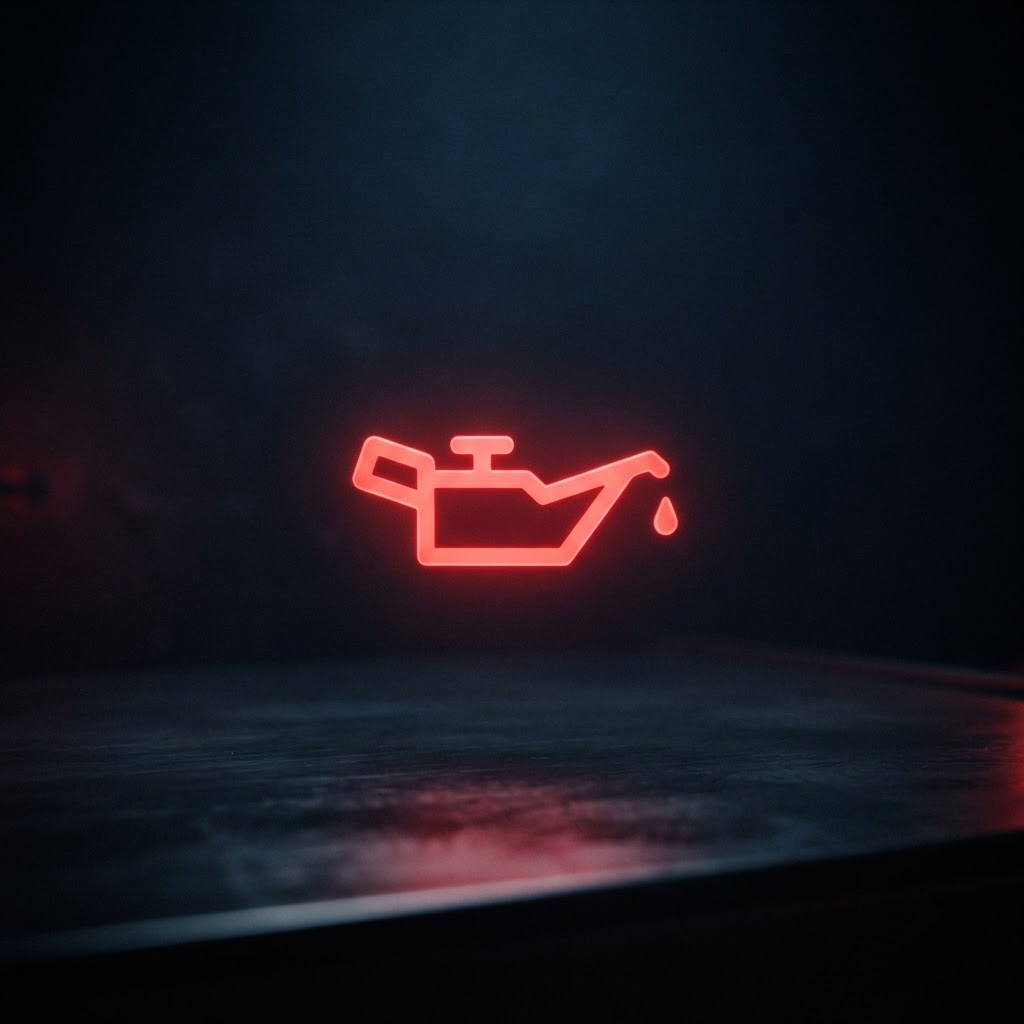
Engine Oil Warning Light
One of the most serious dashboard warnings you can see. Here's exactly what it means, whether you can keep driving, and what it's going to cost you.
What This Warning Light Means
The red engine oil warning light means your engine has critically low oil pressure. Oil pressure is the force that pushes lubricating oil to every moving part inside your engine. Without sufficient pressure, metal parts grind against each other at high speed, generating heat and destroying engine internals within minutes. This is not a "check later" light — it is a stop now warning.
How Serious Is It — and What To Do
🔴 Stop Immediately
If the oil pressure warning light comes on while driving, pull over safely as soon as possible and switch off the engine. Every second you continue driving with low oil pressure risks serious, potentially irreparable engine damage. Do not attempt to limp to a garage.
Do not drive
Do not drive. Pull over immediately, switch the engine off, and check the oil level using the dipstick. If the oil level is normal, do not restart the engine — suspect a pressure sensor fault or pump failure. Call a breakdown service.
Stop immediately if…
Common Causes
Can It Fail an MOT?
🔍 MOT Implications
Typical UK Repair Costs
| Issue | Likelihood | Est. UK cost | DIY? |
|---|---|---|---|
| Low Oil Level | Most Common — 60% of cases | Oil top-up: £8–£20. Full oil and filter service: £60–£120 (independent), £100–£200 (main dealer) | Yes |
| Faulty Oil Pressure Sensor | Common — 20% of cases | Sensor replacement: £60–£150 (parts and labour) | Pro |
| Oil Leak | Common | Sump gasket: £150–£350. Cam cover gasket: £100–£250. Rear main seal: £300–£600+ | Pro |
| Worn Oil Pump | Less Common — older high-mileage vehicles | Oil pump replacement: £300–£800+ (labour intensive) | Pro |
| Blocked Oil Filter | Less Common — overdue service intervals | Oil and filter change: £60–£120 | Yes |
Costs are estimates based on UK independent garages. Main dealer prices may be higher.
Common Fixes in Detail
Low Oil LevelMost Common — 60% of cases
The oil level has dropped below the minimum on the dipstick. Top up with the correct grade oil as specified in your vehicle handbook. Check for leaks underneath the car and monitor regularly. If oil is consistently low, an underlying leak or burning issue must be diagnosed.
Oil top-up: £8–£20. Full oil and filter service: £60–£120 (independent), £100–£200 (main dealer)
DIY possible
Faulty Oil Pressure SensorCommon — 20% of cases
The oil pressure switch or sensor has failed electronically. The actual oil pressure may be fine, but the sensor cannot read it accurately. A mechanic will test pressure directly using a gauge before condemning the sensor. Replacement is straightforward on most vehicles.
Sensor replacement: £60–£150 (parts and labour)
Professional repair required
Oil LeakCommon
Leaks from the sump gasket, cam cover gasket, oil cooler, or drain plug will progressively reduce oil level. Look for oil patches under the car, a burning oil smell, or blue smoke from the exhaust. Leak diagnosis and repair cost varies significantly by location.
Sump gasket: £150–£350. Cam cover gasket: £100–£250. Rear main seal: £300–£600+
Professional repair required
Worn Oil PumpLess Common — older high-mileage vehicles
The oil pump that circulates oil around the engine has worn and can no longer generate adequate pressure. This is a significant repair requiring the engine to be partially dismantled. Often indicates the engine has high mileage and other components may also be worn.
Oil pump replacement: £300–£800+ (labour intensive)
Professional repair required
Blocked Oil FilterLess Common — overdue service intervals
A severely blocked oil filter can restrict oil flow significantly. Most modern filters have a bypass valve that opens when blocked to prevent starvation, but this bypasses filtration entirely. Replace the filter and change the oil immediately.
Oil and filter change: £60–£120
DIY possible
Ownership & Maintenance
Long-Term Impact
Good Habits
Recurring Issues
Vehicle Health
Frequently Asked Questions
Can I drive with the engine oil warning light on?
What's the difference between the oil level light and the oil pressure light?
My oil level is fine but the light is on — what now?
How long can an engine run without oil pressure?
Will the oil warning light fail my MOT?
How much does it cost to fix an oil warning light?
Related Tools & Resources
Warning-light guidance is general UK advice and does not confirm manufacturer-specific behaviour — always check your vehicle handbook. Any illuminated warning light at the time of the MOT test is an automatic failure under the 2018 DVSA rules. MotR is not affiliated with DVLA, DVSA or any vehicle manufacturer. Last reviewed June 2026.