Airbag Warning Light
An illuminated airbag or SRS light means your supplemental restraint system has a fault. Your airbags may not deploy in a collision — and in rare cases, they could deploy unexpectedly. Here's what you need to know.
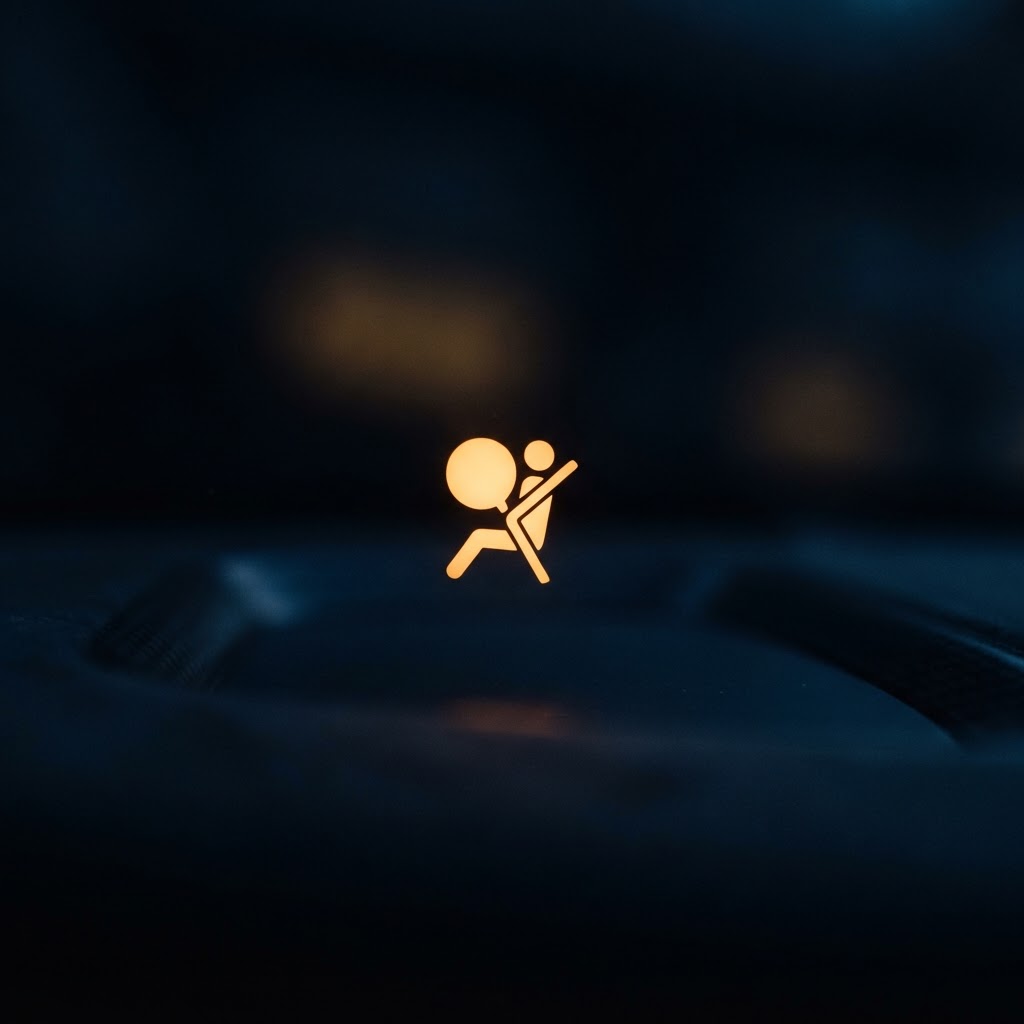
What This Warning Light Means
The airbag warning light (often labelled SRS — Supplemental Restraint System) indicates that the system responsible for deploying airbags and controlling seatbelt pre-tensioners has detected a fault. A faulty SRS system means that in a collision, your airbags may fail to deploy, or may deploy at the wrong time. This is a genuine safety risk for you and your passengers, even if the car drives perfectly normally.
How Serious Is It — and What To Do
🟡 Safety Risk — Repair Promptly
The car drives normally but your passive safety system is compromised. This means in a serious collision, the protection you rely on may not function. This is not a fault to defer. Every mile you drive with an unresolved airbag fault is a mile where the system designed to save your life may fail.
Can drive with caution
You can drive, but understand the risk. If the airbag light is accompanied by the seatbelt warning light, there may also be an issue with your seatbelt pre-tensioners. Have the fault diagnosed as soon as possible. Do not attempt to diagnose or repair SRS faults yourself — incorrect handling of airbag components can cause inadvertent deployment.
Stop immediately if…
Common Causes
Can It Fail an MOT?
🔍 MOT Implications
Typical UK Repair Costs
| Issue | Likelihood | Est. UK cost | DIY? |
|---|---|---|---|
| Clock Spring / Spiral Cable Failure | Very Common — especially on vehicles with steering wheel controls | £150–£350 parts and labour | Pro |
| Corroded SRS Connector | Common — especially in vehicles over 8 years old | £60–£200 depending on connector location and access | Pro |
| Passenger Seat Occupancy Sensor | Common | £120–£400 depending on vehicle | Pro |
| SRS Control Module | Less Common | Repair specialist: £200–£400. New module: £400–£1,200 plus coding | Pro |
| Triggered Crash Sensor After Minor Impact | Occasional | Diagnostic and reset: £50–£100. Sensor replacement if damaged: £100–£250 | Pro |
Costs are estimates based on UK independent garages. Main dealer prices may be higher.
Common Fixes in Detail
Clock Spring / Spiral Cable FailureVery Common — especially on vehicles with steering wheel controls
The clock spring is a wound ribbon cable inside the steering column that connects the airbag, horn, and steering wheel controls through the rotating steering column. It wears out over time. Failure causes an airbag fault code specific to the driver airbag circuit. Replacement requires steering column disassembly.
£150–£350 parts and labour
Professional repair required
Corroded SRS ConnectorCommon — especially in vehicles over 8 years old
The SRS wiring uses yellow-sheathed connectors to distinguish it from normal wiring. These connectors can suffer from moisture ingress and corrosion, particularly under seats where water accumulates. Cleaning or replacing the affected connector resolves the fault.
£60–£200 depending on connector location and access
Professional repair required
Passenger Seat Occupancy SensorCommon
The seat occupancy sensor (sometimes called a mat or bladder sensor) detects whether a passenger is seated and their approximate weight to control airbag deployment. These sensors fail and cause SRS fault codes. Replacement usually involves removing the seat.
£120–£400 depending on vehicle
Professional repair required
SRS Control ModuleLess Common
The airbag control module can fail due to water damage, electrical fault, or physical damage. In some cases specialist remanufacturers can repair and re-flash the existing module for less than replacement cost. Note: after any significant collision, the airbag module stores crash data and must be replaced or reset.
Repair specialist: £200–£400. New module: £400–£1,200 plus coding
Professional repair required
Triggered Crash Sensor After Minor ImpactOccasional
Low-speed impacts — even a parking bump — can trigger satellite crash sensors without deploying the airbags. The fault code remains stored and lights the warning. A technician can confirm no physical damage to the sensor before resetting the fault.
Diagnostic and reset: £50–£100. Sensor replacement if damaged: £100–£250
Professional repair required
Ownership & Maintenance
Long-Term Impact
Good Habits
Recurring Issues
Vehicle Health
Frequently Asked Questions
Can I drive with the airbag light on?
Could the airbag accidentally deploy while I'm driving?
The airbag light came on after I had my car serviced — what happened?
Can I reset the airbag light myself?
My airbag deployed in an accident — can I just have the light reset?
Does the airbag warning light fail an MOT?
Related Tools & Resources
Warning-light guidance is general UK advice and does not confirm manufacturer-specific behaviour — always check your vehicle handbook. Any illuminated warning light at the time of the MOT test is an automatic failure under the 2018 DVSA rules. MotR is not affiliated with DVLA, DVSA or any vehicle manufacturer. Last reviewed June 2026.