Check Engine Light: What It Means in the UK
The engine management light (EML) covers hundreds of possible faults — from a loose fuel cap to a failing catalytic converter. Here's how to tell the difference between urgent and advisory, and exactly what you should do.
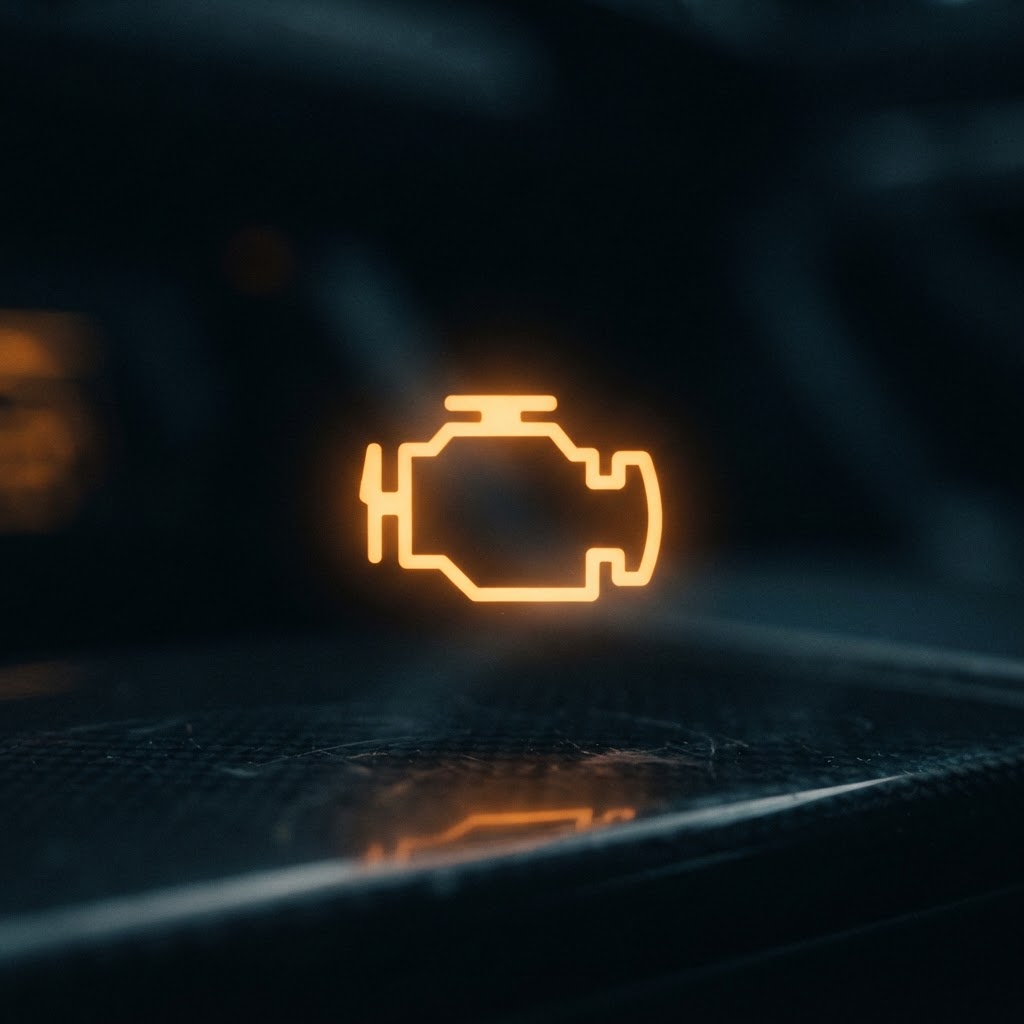
What This Warning Light Means
The check engine light — officially the Engine Management Light (EML) or Malfunction Indicator Lamp (MIL) in the UK — is triggered by the engine's electronic control unit (ECU) when a sensor reading falls outside acceptable parameters. It does not mean the engine is about to fail; it means the ECU has logged a diagnostic fault code (DTC) that requires investigation. The critical distinction is whether the light is solid (steady) or flashing/blinking. A solid light means there's a stored fault — drive with caution and get it diagnosed soon. A flashing light means active engine misfiring is occurring, which can destroy the catalytic converter within minutes — stop driving immediately.
How Serious Is It — and What To Do
🟡 Steady Light — Book Diagnosis Soon
A steady engine management light means the ECU has logged a fault but the engine is currently running within acceptable limits. You can continue driving with caution, but the fault must be diagnosed by a mechanic using an OBD reader before booking an MOT. A flashing light is completely different — this indicates active misfiring and demands immediate action.
Can drive with caution
For a steady light: reduce speed, avoid high engine loads, and book a diagnostic scan within 24–48 hours. For a flashing/blinking light: stop driving immediately. Active misfiring sends unburnt fuel into the catalytic converter, which can overheat and destroy it — turning a £50 fix into a £1,200+ one.
Stop immediately if…
Common Causes
Can It Fail an MOT?
🔍 MOT Implications
Typical UK Repair Costs
| Issue | Likelihood | Est. UK cost | DIY? |
|---|---|---|---|
| Loose or Damaged Fuel Cap | Very Common — 15% of check engine lights | Fuel cap replacement: £10–£25 | Yes |
| Faulty Oxygen Sensor | Common — 15% of cases | Oxygen sensor replacement: £100–£280 (per sensor, parts and labour) | Pro |
| Catalytic Converter Failure | Common — especially on high-mileage vehicles | Catalytic converter replacement: £400–£1,500+ depending on vehicle | Pro |
| Spark Plugs or Coil Pack (Misfire) | Common — especially on older petrol vehicles | Spark plugs (all 4): £50–£120 fitted. Coil pack per cylinder: £60–£180 fitted | Pro |
| EGR Valve Fault (Diesel) | Very Common on diesel vehicles over 80,000 miles | EGR cleaning: £80–£150. EGR replacement: £200–£500 | Pro |
| Mass Airflow (MAF) Sensor | Common | MAF sensor cleaning: £30–£60. Replacement: £80–£220 | Yes |
Costs are estimates based on UK independent garages. Main dealer prices may be higher.
Common Fixes in Detail
Loose or Damaged Fuel CapVery Common — 15% of check engine lights
An improperly sealed fuel cap allows fuel vapour to escape, triggering the evaporative emissions monitor. Tighten the cap fully (should click 3 times on most vehicles) and the light should extinguish within 1–3 drive cycles. If the cap is cracked or the seal is damaged, replace it.
Fuel cap replacement: £10–£25
DIY possible
Faulty Oxygen SensorCommon — 15% of cases
Lambda/oxygen sensors measure exhaust gas composition and tell the ECU how to adjust fuelling. Failed sensors cause increased fuel consumption, failed emissions tests, and potential catalytic converter damage. Most vehicles have 2–4 sensors; the pre-cat sensor has most impact on running.
Oxygen sensor replacement: £100–£280 (per sensor, parts and labour)
Professional repair required
Catalytic Converter FailureCommon — especially on high-mileage vehicles
The catalytic converter converts harmful exhaust gases into less harmful ones. It fails from poisoning (wrong fuel additives), physical damage (road debris), or simply wearing out. A failed cat causes an emissions failure and continuous EML. This is one of the most expensive engine light repairs.
Catalytic converter replacement: £400–£1,500+ depending on vehicle
Professional repair required
Spark Plugs or Coil Pack (Misfire)Common — especially on older petrol vehicles
Worn spark plugs or a failing ignition coil cause engine misfires — the EML may flash under load. The ECU identifies which cylinder(s) are misfiring via the fault code. Replacement of plugs and coils is straightforward and relatively inexpensive.
Spark plugs (all 4): £50–£120 fitted. Coil pack per cylinder: £60–£180 fitted
Professional repair required
EGR Valve Fault (Diesel)Very Common on diesel vehicles over 80,000 miles
The exhaust gas recirculation valve recirculates a proportion of exhaust gases back into the intake to reduce NOx emissions. They frequently clog with carbon deposits on diesels, especially those used mainly for short journeys. Cleaning can resolve minor cases; severe blockages require replacement.
EGR cleaning: £80–£150. EGR replacement: £200–£500
Professional repair required
Mass Airflow (MAF) SensorCommon
The MAF sensor measures the volume of air entering the engine. A dirty or failed sensor causes incorrect fuelling — typically rich running with black smoke and high fuel consumption, or lean running with hesitation. Cleaning with MAF cleaner spray often resolves it; replacement needed if damaged.
MAF sensor cleaning: £30–£60. Replacement: £80–£220
DIY possible
Ownership & Maintenance
Long-Term Impact
Good Habits
Recurring Issues
Vehicle Health
Frequently Asked Questions
What is the difference between the check engine light and the engine management light?
Can I drive with the engine management light on?
Will the engine management light fail an MOT?
How much does it cost to get a diagnostic scan in the UK?
Can I reset the engine management light myself?
Does a check engine light always mean something serious?
Related Tools & Resources
Warning-light guidance is general UK advice and does not confirm manufacturer-specific behaviour — always check your vehicle handbook. Any illuminated warning light at the time of the MOT test is an automatic failure under the 2018 DVSA rules. MotR is not affiliated with DVLA, DVSA or any vehicle manufacturer. Last reviewed June 2026.