TPMS Warning Light: Tyre Pressure Explained
The tyre pressure monitoring system light warns that one or more tyres are significantly under-inflated. Under-inflated tyres are a leading cause of tyre blowouts and contribute to poor handling, increased fuel consumption, and faster tyre wear.
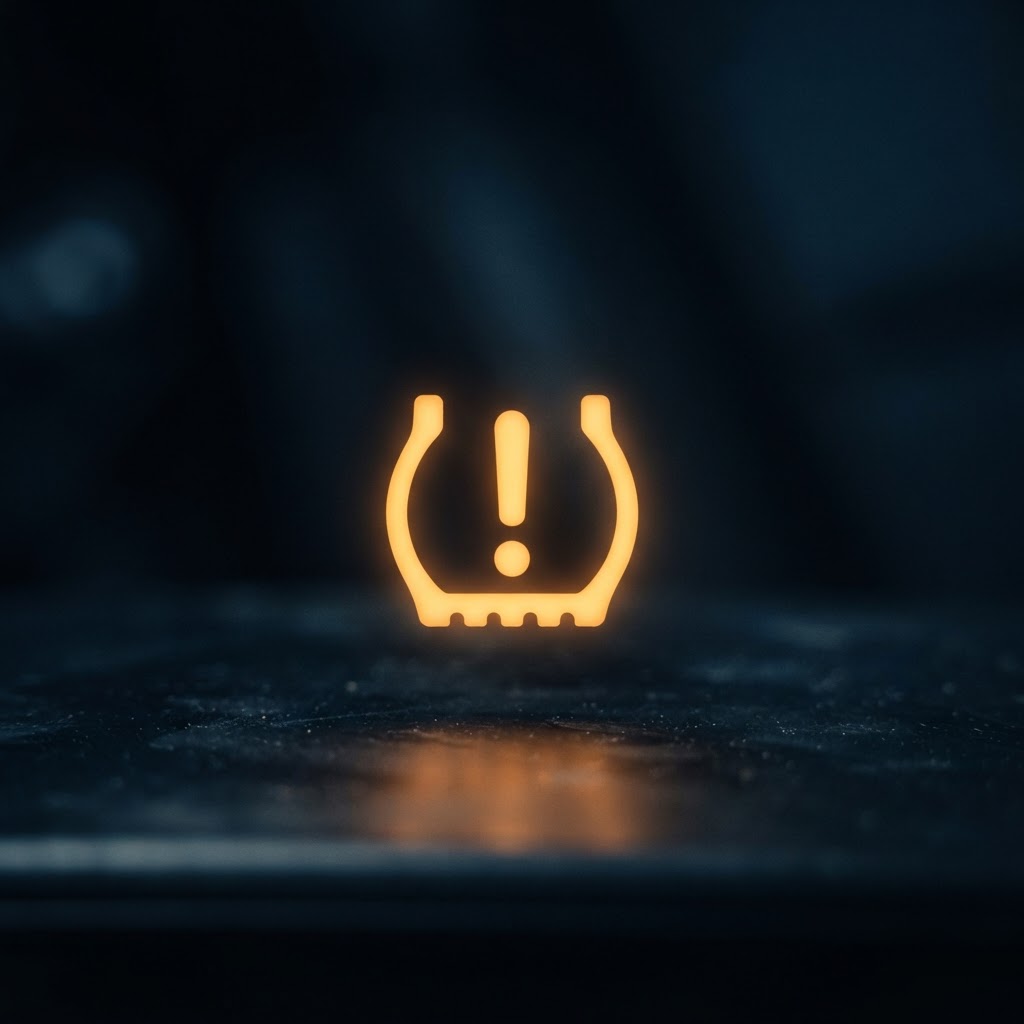
What This Warning Light Means
The TPMS warning light (a cross-section of a tyre with an exclamation mark) illuminates when one or more tyres drops 25% or more below the recommended pressure. Tyre Pressure Monitoring Systems have been mandatory on new cars sold in the EU (and therefore UK) since November 2014. Two types exist: direct TPMS uses pressure sensors inside each wheel that transmit wirelessly; indirect TPMS uses the ABS wheel speed sensors to detect a smaller (therefore faster-rotating) under-inflated tyre. If the TPMS light flashes for 60–90 seconds then remains solid, this typically indicates a sensor fault rather than low pressure.
How Serious Is It — and What To Do
🟡 Act Promptly — Check Pressure Immediately
Check tyre pressures at the earliest opportunity — most petrol stations have air compressors. A tyre at 25% below recommended pressure (the TPMS trigger point) affects handling and braking significantly. Driving on a visibly flat tyre risks sudden tyre failure at speed, which can cause loss of vehicle control.
Can drive with caution
Check pressures immediately and inflate to the correct specification (found on a sticker inside the driver's door jamb or in the handbook). Drive slowly and carefully to the nearest air compressor. If a tyre is visibly flat, do not drive on it — use the spare or call breakdown. A completely flat tyre driven on damages the tyre and potentially the wheel.
Stop immediately if…
Common Causes
Can It Fail an MOT?
🔍 MOT Implications
Typical UK Repair Costs
| Issue | Likelihood | Est. UK cost | DIY? |
|---|---|---|---|
| Low Tyre Pressure | Most Common — 70% of TPMS warnings | Free (petrol station air) or £1–£2 (pay-to-use compressor) | Yes |
| Puncture / Slow Puncture | Common | Tyre puncture repair: £15–£30. Tyre replacement: £60–£300+ depending on tyre and vehicle | Pro |
| Faulty TPMS Sensor | Common on vehicles over 5 years old | TPMS sensor replacement (per sensor): £40–£100 (parts + fitting). Some vehicles require all four replaced simultaneously for system calibration | Pro |
| TPMS System Calibration Required | Common after tyre or wheel changes | TPMS calibration: free (self-reset) or £20–£50 at a tyre centre if a programming tool is required | Yes |
Costs are estimates based on UK independent garages. Main dealer prices may be higher.
Common Fixes in Detail
Low Tyre PressureMost Common — 70% of TPMS warnings
Simply inflate the tyre to the recommended pressure. Check all four tyres — the TPMS may only flag the most severely affected. The correct pressure is on the driver's door jamb sticker or in the handbook; front and rear pressures are often different. After inflating, drive for a few minutes — the TPMS light should extinguish automatically on direct systems.
Free (petrol station air) or £1–£2 (pay-to-use compressor)
DIY possible
Puncture / Slow PunctureCommon
A nail, screw, or glass fragment in the tread causes a gradual pressure loss. The tyre appears normal initially but pressure drops over hours or days. A tyre repair shop can plug or patch most tread punctures for a modest cost. Sidewall punctures cannot be safely repaired — tyre replacement is required.
Tyre puncture repair: £15–£30. Tyre replacement: £60–£300+ depending on tyre and vehicle
Professional repair required
Faulty TPMS SensorCommon on vehicles over 5 years old
TPMS sensors contain a battery that lasts 5–10 years. When the battery dies, the sensor fails and the TPMS light illuminates as a system fault (often flashing before remaining solid). The sensor must be replaced — they cannot be recharged. Replacement requires deflating the tyre, removing it from the rim, and fitting the new sensor.
TPMS sensor replacement (per sensor): £40–£100 (parts + fitting). Some vehicles require all four replaced simultaneously for system calibration
Professional repair required
TPMS System Calibration RequiredCommon after tyre or wheel changes
After fitting new tyres, wheels, or sensors, the TPMS system must be recalibrated (relearned). Some vehicles do this automatically after driving above 25mph for several minutes; others require a specific reset procedure using the infotainment menu or a TPMS programming tool.
TPMS calibration: free (self-reset) or £20–£50 at a tyre centre if a programming tool is required
DIY possible
Ownership & Maintenance
Long-Term Impact
Good Habits
Recurring Issues
Vehicle Health
Frequently Asked Questions
What does the TPMS warning light look like?
Does the TPMS tell me which tyre is low?
Will TPMS fail my MOT?
How do I reset the TPMS light after inflating the tyres?
Can cold weather trigger the TPMS light?
How much does a TPMS sensor cost to replace?
Related Tools & Resources
Warning-light guidance is general UK advice and does not confirm manufacturer-specific behaviour — always check your vehicle handbook. Any illuminated warning light at the time of the MOT test is an automatic failure under the 2018 DVSA rules. MotR is not affiliated with DVLA, DVSA or any vehicle manufacturer. Last reviewed June 2026.