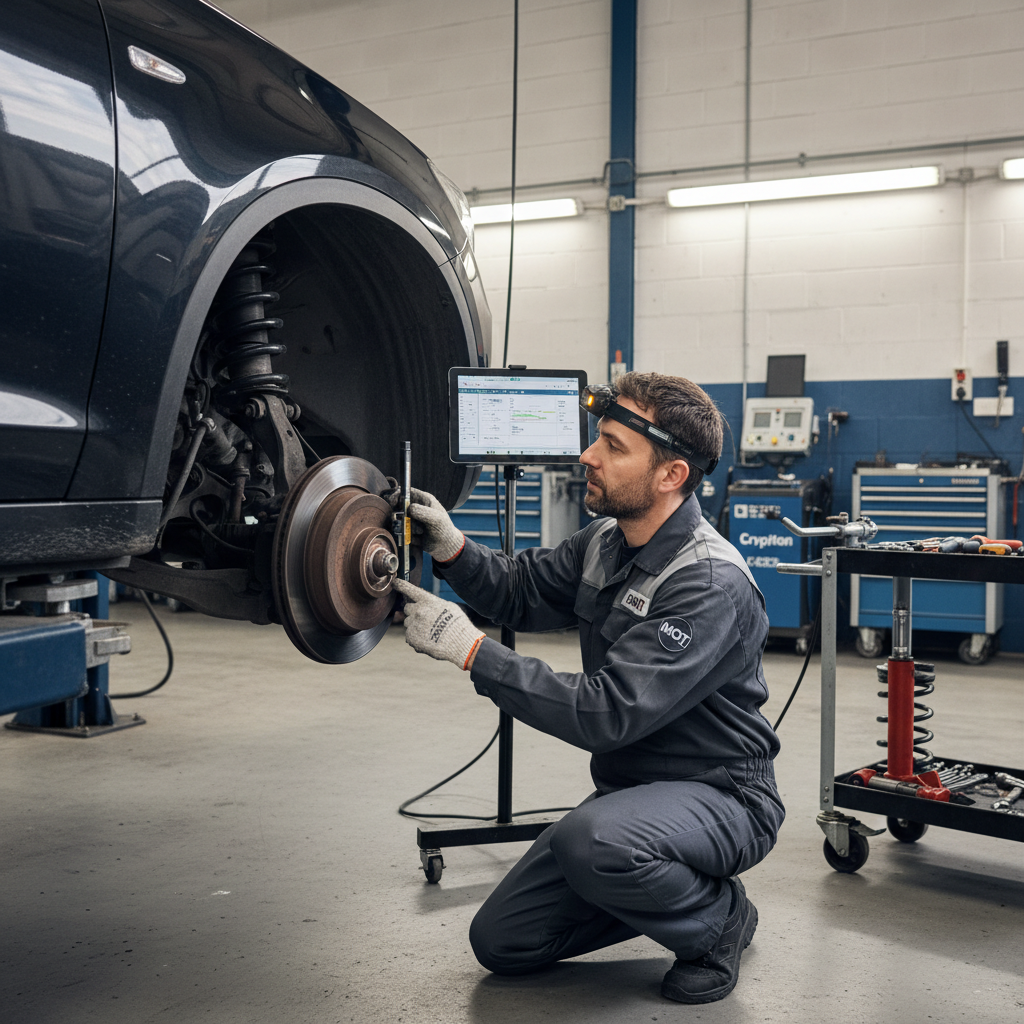
MOT Test Overview
The MOT test checks that your vehicle meets minimum road safety and environmental standards. It's required every year for vehicles over three years old. From May 2018, MOT outcomes are categorised as: Pass, Advisory, Minor, Major, or Dangerous.
MOT result categories
- Pass — vehicle meets minimum standards
- Advisory — item to monitor but not a failure
- Minor — defect unlikely to cause immediate danger (no failure)
- Major — significant defect — FAIL
- Dangerous — direct risk to safety — FAIL, do not drive
Top Causes of MOT Failure
According to DVSA data, these are the most common reasons vehicles fail their MOT in the UK each year.
1. Lights & Signalling (~30% of failures)
Most Common- Blown bulbs (headlights, rear lights, brake lights, indicators)
- Incorrect beam alignment
- Non-functioning number plate light
- Broken or cracked lamp units
2. Suspension
Very Common- Worn shock absorbers
- Damaged or corroded suspension arms
- Worn ball joints
- Perished rubber bushings
3. Brakes
Safety Critical- Uneven braking across axles
- Brake fluid contamination
- Severely worn brake pads or discs
- Handbrake not holding effectively
4. Tyres & Wheels
Common- Tread depth below 1.6mm minimum
- Cuts, bulges, or sidewall damage
- Tyre not correctly seated on rim
- Incorrect tyre size for the vehicle
5. Windscreen & Visibility
Common- Crack or chip in Zone A (central 290mm strip)
- Windscreen wipers not clearing effectively
- Wiper blades split or streaking
- Obstructions to driver's field of view
Quick Pre-MOT Checklist
Run through these checks a week before your MOT to avoid easy, preventable failures.
DIY pre-MOT checks
- Walk around and check ALL lights: headlights, indicators, reverse, brake, fog, number plate
- Check windscreen for chips and cracks — especially driver's eyeline
- Check tyre tread depth and condition on all four tyres
- Test windscreen washers and ensure wipers clear effectively
- Check horn works
- Verify number plate is clean and legible
- Check handbrake holds on a slope
- Look under the car for visible rust on brake pipes or exhaust
- Check engine warning lights are not illuminated
- Ensure steering doesn't pull or feel loose
Tester Tip
Your tester will do a visual check of the engine bay. A massively oil-leaking engine or very low brake fluid level can both cause issues. A quick check before you go in costs nothing.
What Happens If You Fail?
If your car fails its MOT, the garage will provide a VT30 refusal certificate listing each failure item. You can either have the same garage fix the faults and retest within 10 working days (partial retest fee applies), or take the car elsewhere for repairs and a full retest.
After a failure
- You'll receive a VT30 certificate detailing failure items
- Repair and retest at the same garage within 10 days for reduced retest fee
- Full retest fee applies if you take it elsewhere
- Check the MOT history on MOTR to see what advisories carried over from previous years