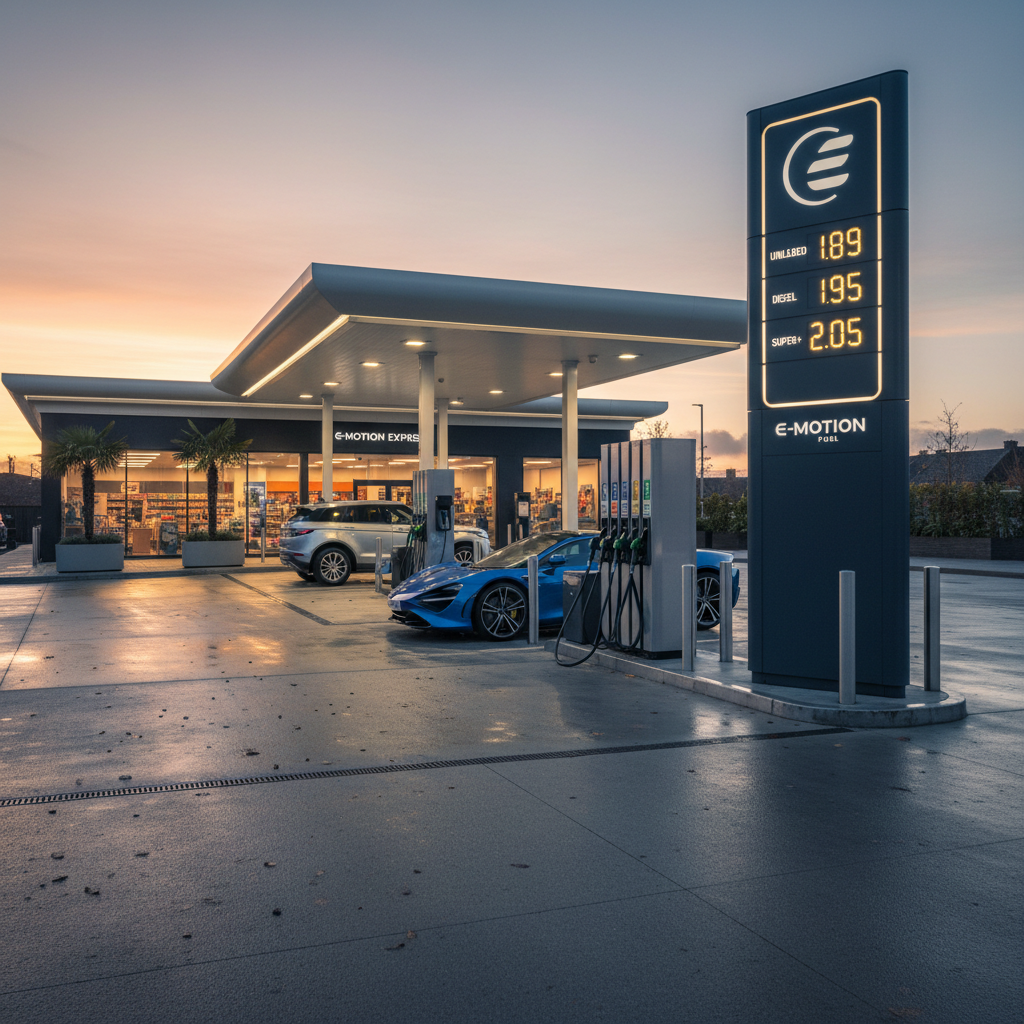
UK Fuel Prices in 2026
UK fuel prices have continued to fall from the record highs seen in 2022, when petrol briefly exceeded 190p per litre. By early 2026, average prices have stabilised in a more typical range — though global oil market volatility means prices can shift rapidly.
Average UK pump prices (May 2026)
- Unleaded petrol (E10): ~143p per litre (national average)
- Diesel (B7): ~147p per litre (national average)
- Supermarket forecourts: typically 3–6p cheaper than branded stations
- Motorway services: typically 10–15p more expensive than supermarkets
- E5 premium petrol: ~155–165p per litre (for older vehicles)
Price tip
A typical 55-litre fuel tank costs approximately £78–£82 to fill on petrol, or £80–£85 on diesel, at average May 2026 prices. Using a supermarket forecourt and a cashback credit card can reduce the effective cost by 5–8p per litre.
Fuel Duty & VAT Explained
Approximately 60% of the price you pay at the pump is tax. Understanding the breakdown helps explain why UK prices remain high relative to some other countries even when crude oil prices fall.
What's in the price per litre
- Fuel duty: 52.95p per litre (frozen since March 2022)
- VAT at 20%: adds approximately 23–25p per litre
- Retailer margin: typically 3–6p per litre
- Crude oil cost: remainder (~55–65p) based on global market
How To Spend Less On Fuel
Beyond finding the cheapest forecourt, driving technique has a significant impact on real-world fuel consumption. Aggressive driving can increase fuel use by 30–40% compared to smooth, anticipatory driving.
Proven ways to cut fuel costs
- Maintain correct tyre pressure — underinflation increases fuel use by up to 3%
- Remove roof boxes or bike racks when not in use — drag significantly increases consumption
- Avoid idling — modern engines warm up faster when driven gently
- Accelerate smoothly — hard acceleration uses 2–3× more fuel than gentle acceleration
- Use the highest safe gear — lower revs = lower fuel consumption
- Fill up at supermarket forecourts — consistently cheapest
- Pay with a cashback credit card — 0.5–1% back on every purchase