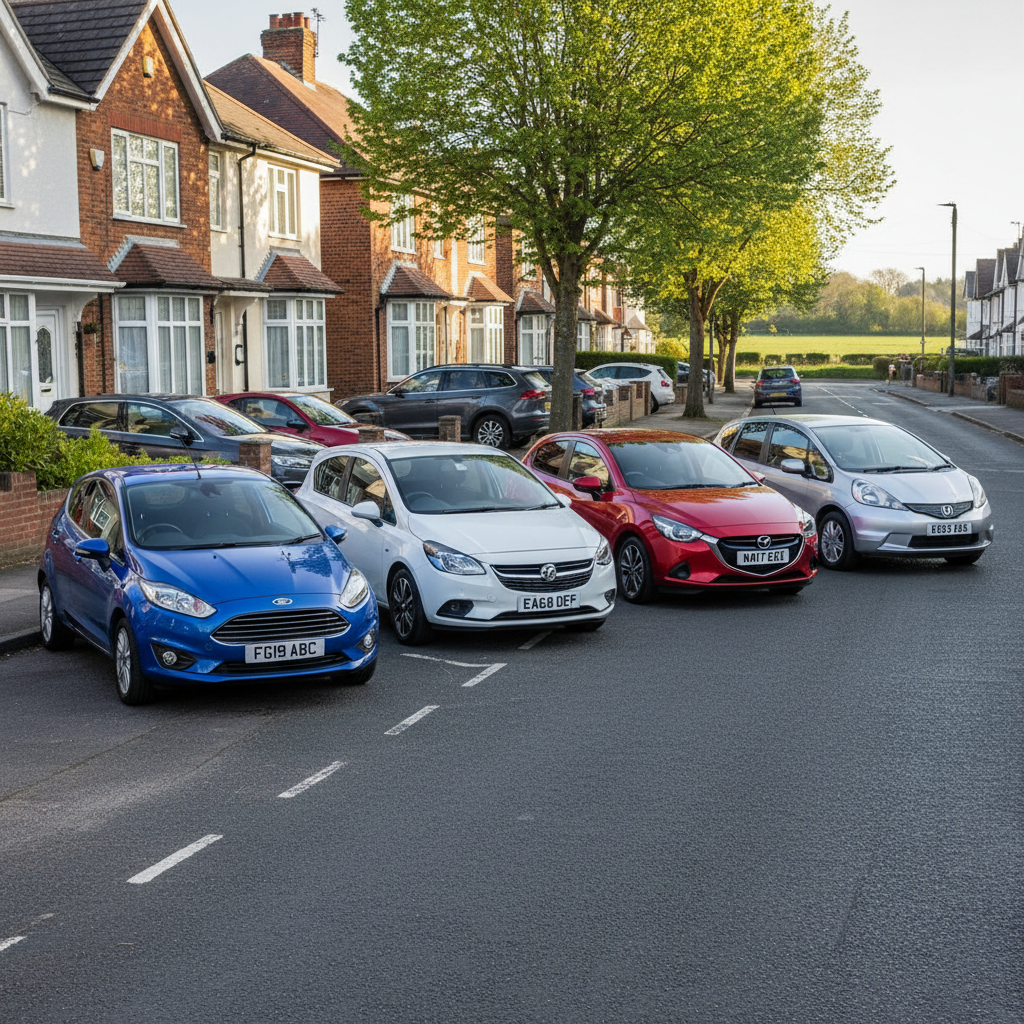
Our Top Picks
Our strongest first-car picks for UK drivers are the Toyota Yaris, Hyundai i10, Ford Fiesta, VW Polo and Honda Jazz. Each keeps insurance groups low, returns 50+ MPG and has a strong reliability record — so the right choice comes down to your budget, insurance group and how you'll use the car. We break down each model, plus insurance groups, running costs, ULEZ and a full buyer's checklist, below.
What Makes a Good First Car?
Choosing your first car in the UK comes down to four things: insurance cost, fuel economy, reliability, and running costs. New drivers face the highest insurance premiums, so picking a car in a low insurance group can save hundreds of pounds per year.
Key factors to look for
- Insurance group 1–15 (lower = cheaper to insure)
- Engine size 1.0–1.2 litre (lower CO₂ = cheaper road tax)
- Strong reliability record (fewer repair bills)
- Good fuel economy (50+ MPG combined)
- Reasonable spare parts availability
1. Ford Fiesta
The Fiesta is the UK's best-selling car for a reason. It's fun to drive, cheap to run, and used examples are everywhere — meaning parts and mechanics are easy to find.
Ford Fiesta
Most Popular- Insurance groups: 3–23 depending on trim
- Best pick: 1.0 EcoBoost 100ps (group 10–14)
- Road tax: £20–£170 depending on CO₂
- Typical MPG: 50–55 combined
- Reliability: Very good on pre-2020 models
New Driver Tip
Avoid the ST or ST-Line high-performance trims — insurance costs will be painful. Stick to the 1.0 EcoBoost or 1.1 Ti-VCT engine.
2. Toyota Yaris
The Yaris is legendary for reliability. Toyota consistently tops reliability surveys and the Yaris is cheap to insure, cheap to run, and holds its value well compared to rivals.
Toyota Yaris
Most Reliable- Insurance groups: 6–18 depending on year
- Best pick: 1.0 VVT-i or 1.5 Hybrid
- Road tax: £0 (hybrid) or £20 (1.0 petrol pre-2017)
- Typical MPG: 55–65 combined (up to 88mpg hybrid)
- Reliability: Excellent — top of reliability surveys
3. Hyundai i10
If keeping costs absolutely minimal is the priority, the i10 is hard to beat. It's a city car with tiny running costs, sits in very low insurance groups, and Hyundai's build quality has improved massively.
Hyundai i10
Cheapest to Run- Insurance groups: 1–8
- Best pick: 1.0 MPI (66ps) — group 2–4
- Road tax: £20 per year (2017 models)
- Typical MPG: 55–60 combined
- Reliability: Good — improving year on year
4. VW Polo
The Polo feels more premium than many rivals and is a step above the Fiesta in perceived quality. It's slightly pricier to insure but holds its value better and feels very solid.
VW Polo
Premium Feel- Insurance groups: 8–22
- Best pick: 1.0 MPI 80ps (group 8–12)
- Road tax: £30–£165 depending on year
- Typical MPG: 50–58 combined
- Reliability: Good, with some reported DSG issues on MK6
5. Honda Jazz
The Jazz is the practical choice. Its 'Magic Seat' system gives a genuinely huge amount of interior space for a small car. Insurance costs are very reasonable and Honda's reliability is comparable to Toyota.
Honda Jazz
Most Practical- Insurance groups: 9–18
- Best pick: 1.3 i-VTEC (2016–2020 models)
- Road tax: £30–£145
- Typical MPG: 50–58 combined
- Reliability: Excellent — Honda consistently scores well
Insurance Groups Explained: The Single Biggest Cost Factor
Every car in the UK is assigned an insurance group from 1 to 50 by the Association of British Insurers (ABI), with group 1 being the cheapest to insure and group 50 the most expensive. For a new driver — who already faces the highest premiums due to inexperience — the insurance group of your first car is the single biggest factor in your annual insurance cost. A car in group 2 could cost £600–£900 less per year to insure than an otherwise similar car in group 15.
| Insurance group | Typical new-driver premium | Example first cars |
|---|---|---|
| 1–5 | £800–£1,300 | Hyundai i10 1.0, VW Up, Fiat 500 1.0, Kia Picanto |
| 6–10 | £1,100–£1,700 | Toyota Yaris 1.0, Ford Fiesta 1.1, Skoda Citigo |
| 11–15 | £1,400–£2,100 | VW Polo 1.0, Honda Jazz 1.3, Seat Ibiza 1.0 |
| 16–25 | £1,900–£3,000 | Ford Fiesta EcoBoost, Vauxhall Corsa turbo |
| 26–50 | £2,800+ | Hot hatches and larger engines — avoid as a first car |
Premiums are illustrative ranges for a 17-year-old new driver with telematics; actual quotes vary by postcode, occupation and no-claims history. Always get a quote before buying.
The golden rule for new drivers
Running Costs: The True Price of Your First Car
The purchase price is only the start. Running costs — fuel, insurance, tax, servicing, MOT, repairs and depreciation — typically exceed the purchase price within two to three years for a budget first car. Budget for these before you commit.
| Cost | Typical annual amount | Notes for new drivers |
|---|---|---|
| Insurance | £900–£2,000 | Largest single cost; telematics (black box) can cut it by 20–40% |
| Fuel | £700–£1,400 | Depends on mileage and MPG; a 55 MPG car saves £300+/yr vs a 35 MPG car |
| Road tax (VED) | £0–£190 | Low-CO₂ and hybrid cars pay less; pre-2017 petrols can be £20–£30 |
| Servicing | £150–£350 | Annual service; budget £200 as an average |
| MOT | £54.85 (max) | Legal maximum test fee; many garages charge less |
| Repairs & tyres | £200–£600 | Budget for at least one set of tyres and minor fixes |
| Depreciation | £500–£1,500/yr | Higher on new cars; used first cars depreciate less in £ terms |
For a full breakdown, see our guide to cheap cars to run in the UK and car maintenance costs.
Fuel Economy: Why MPG Matters More Than You Think
Fuel is the second-largest running cost after insurance. A first car that returns 55 MPG instead of 38 MPG saves roughly £350–£500 per year on petrol (assuming 8,000 miles). Over three years of ownership, that's £1,000–£1,500 — often more than the difference in purchase price between an efficient and inefficient model.
MPG benchmarks for first cars
- 35–45 MPG: acceptable for older petrols, but costly at today's fuel prices
- 45–55 MPG: good — the sweet spot for most petrol first cars
- 55–65 MPG: excellent — typical of efficient petrols and some hybrids
- 65+ MPG: outstanding — hybrid Yaris, Corolla and efficient diesels
Reliability & MOT History Trends
Reliability matters more for a first car than almost any other — a new driver can least afford surprise repair bills. Japanese brands (Toyota, Honda, Mazda, Suzuki) consistently top reliability surveys, while French and Italian brands tend to score lower on older models. But you don't need to rely on surveys alone: the DVSA MOT history for any car reveals recurring failure patterns that tell you how reliable that specific car (and model) has been.
Before buying, run the registration through our MOT history checker. Look for repeated failures on the same items (brakes, suspension, emissions) across tests — that's a reliability red flag no survey will show you.
| Reliability tier | Brands | Notes for first cars |
|---|---|---|
| Top tier | Toyota, Honda, Mazda, Suzuki | Lowest repair risk; Yaris and Jazz are first-car legends |
| Strong | Hyundai, Kia, Skoda, VW | Good with long warranties; Kia/Hyundai offer 5–7 yr cover |
| Average | Ford, Vauxhall, Nissan, Seat | Fine with good history; check MOT trends carefully |
| Variable | Renault, Peugeot, Citroën, Fiat | Some models excellent, others problematic — research per model |
Parts Availability, Servicing & Maintenance Costs
A cheap car is only cheap if the parts and servicing are affordable too. Popular models like the Ford Fiesta, Vauxhall Corsa and VW Polo have huge parts availability — any garage can fix them, and parts cost a fraction of those for rarer or premium brands. Less common imports can have long parts lead times and higher bills.
| Factor | High-availability (Fiesta, Corsa, Polo) | Lower-availability (rare imports, niche models) |
|---|---|---|
| Service cost | £150–£250 | £250–£450 |
| Common parts | Same-day from any motor factor | Days to weeks; often dealer-only |
| Garage choice | Any independent can service | May need specialist or main dealer |
| Tyre cost | £50–£80 each | £80–£140+ each |
Road Tax (VED) for First Cars
Road tax is an annual cost that varies by CO₂ emissions, fuel type and registration date. For a first car, the difference between a £20/year and £190/year car is £170 — small per year, but £510 over a three-year ownership. Low-CO₂ petrols registered before April 2017 can pay as little as £20/year, while hybrids registered before 2017 may pay £0.
Check any car's live tax status and renewal date using our vehicle tax checker, and see our guide to cars with low road tax for the cheapest-to-tax models.
Depreciation: New vs Used First Cars
Depreciation is the silent cost — the amount your car loses in value over time. New cars lose 15–35% of their value in the first year alone, and a new driver who buys a £15,000 car new may see it worth £10,000 after 12 months. A used first car (3–6 years old) has already taken its biggest depreciation hit, so it loses far less in pound terms over the same period.
Why used usually wins for first cars
Safety Ratings & Euro NCAP: Why They Matter
As a new driver, your statistical risk of an accident is highest in the first year after passing your test. A car with a strong safety rating can literally be life-saving. Euro NCAP (the European New Car Assessment Programme) independently crash-tests cars and awards stars from 1 to 5, with 5 being the safest. Look for cars with a 4- or 5-star Euro NCAP rating — most modern first-car candidates achieve this, but older or budget models may only achieve 3.
Safety features to prioritise
- Euro NCAP 4 or 5 stars (check the year tested — ratings evolve)
- ABS and electronic stability control (ESC) — standard on all post-2014 cars
- Multiple airbags (front, side, curtain)
- ISOFIX child seat mounts if you may carry younger passengers
- Autonomous emergency braking (AEB) on newer models — proven to reduce rear-end crashes
ULEZ Suitability: Will Your First Car Be Charged?
The London Ultra Low Emission Zone (ULEZ) and similar clean air zones in other UK cities (Birmingham, Bristol, Glasgow, etc.) charge a daily fee for non-compliant vehicles — £12.50/day in London. For a new driver on a budget, a ULEZ-compliant car avoids a charge that could add £60+/week if you drive in the zone. Most petrol cars registered after 2005 (Euro 4) are ULEZ-compliant; diesels need to be Euro 6 (typically registered after September 2015).
ULEZ checklist
Manual vs Automatic: Which Is Better for a First Car?
| Factor | Manual | Automatic |
|---|---|---|
| Licence | Full manual licence lets you drive both | Auto-only licence restricts you to automatics |
| Learning | Standard for UK driving tests | Fewer test centres offer auto tests |
| Running cost | Slightly better MPG on older cars | Modern dual-clutch autos are close to manual MPG |
| City driving | More clutch work in traffic | Easier in stop-start traffic |
| Resale | Larger market of manual buyers | Growing demand, especially for hybrids (auto-only) |
| Insurance | Marginally cheaper in some cases | Sometimes slightly higher on older autos |
If you pass your test in a manual, you can drive both — giving you a wider choice of first cars. Passing in an automatic is easier for some, but locks you out of manual cars unless you retake. For most new drivers, learning in a manual maximises your options.
Petrol vs Hybrid: Which Fuel for a First Car?
Diesel is rarely the right choice for a first car — new drivers do mostly short, urban journeys where diesels clog their DPF (diesel particulate filter) and fail emissions tests. The real decision is petrol vs hybrid.
| Factor | Petrol | Hybrid (self-charging) |
|---|---|---|
| Purchase price | Lower | £1,000–£3,000 more than equivalent petrol |
| MPG | 45–55 typical | 55–70 typical; best in town |
| Road tax (pre-2017) | £20–£130 | £0 (often free band) |
| Road tax (post-2017) | £190/year | £190/year (changed April 2025) |
| Best for | All-round use, motorway | Town/city driving, stop-start traffic |
| Reliability | Proven, simple | Excellent (Toyota/Honda hybrids) |
| Battery concerns | None | Hybrid batteries last 10–15+ yrs; Toyota warrants to 15 yrs/100k miles |
A self-charging hybrid like the Toyota Yaris Hybrid is an outstanding first car if it fits your budget — near-zero town emissions, 60+ MPG in urban driving, and exceptional reliability. See our cheap cars to run guide for hybrid running costs.
Hatchback vs Small SUV: Which Body Style?
| Factor | Hatchback | Small SUV / crossover |
|---|---|---|
| Insurance | Lower (groups 1–15) | Higher (typically groups 10–25) |
| Fuel economy | Better (lighter) | Worse (heavier, more drag) |
| Purchase price | Lower | £1,500–£4,000 more |
| Boot space | Adequate for daily use | Larger, easier load height |
| Driving position | Lower | Higher — some prefer the visibility |
| First-car verdict | Best choice for most | Fine if budget allows and you value the raised seat |
For most new drivers, a hatchback is the smarter first car — cheaper to buy, insure and run. See our guide to the best hatchbacks for more.
New vs Used, Finance vs Cash Purchase
For a first car, used almost always wins on total cost — but finance can make a newer car affordable monthly, and there are situations where a nearly-new car with a warranty suits a risk-averse new driver or a parent buying for their child.
| Option | Upfront cost | Best for | Watch out for |
|---|---|---|---|
| Used (3–6 yrs), cash | £3,000–£8,000 | Budget-focused new drivers | No warranty; check MOT history carefully |
| Nearly-new (1–2 yrs), cash | £8,000–£14,000 | Those wanting reliability + low mileage | Higher depreciation than older used |
| Used on PCP finance | Deposit + monthly | Spreading cost; lower monthly than HP | Mileage limits; you don't own it at end |
| Used on HP finance | Deposit + monthly | Wanting to own at the end | Higher monthly than PCP; interest adds up |
| New, PCP | Deposit + monthly | Risk-averse; full warranty | Biggest depreciation hit in year 1 |
Finance reality check
Buying Guidance: First Cars by Person and Situation
Different new drivers have different needs. Here's how to choose based on who you are and how you'll use the car.
| Buyer | Priorities | Best first-car picks |
|---|---|---|
| 17-year-old | Lowest insurance group possible, telematics-friendly | Hyundai i10, VW Up, Kia Picanto, Fiat 500 1.0 |
| Student | Cheap to run, reliable, easy to park | Toyota Aygo/Yaris, VW Up, Skoda Citigo |
| Apprentice | Commuting on a budget, low depreciation | Ford Fiesta 1.0, Honda Jazz, VW Polo 1.0 |
| Commuter (motorway) | Refinement, economy, comfort at speed | Toyota Yaris Hybrid, Honda Jazz, VW Polo |
| City driver | Small footprint, easy parking, ULEZ | Fiat 500, VW Up, Hyundai i10, Toyota Aygo |
| Rural driver | Reliability, ground clearance, parts access | Ford Fiesta, Honda Jazz, Suzuki Swift |
| Parent buying for a child | Safety, reliability, low TCO, 5-star NCAP | Toyota Yaris, Honda Jazz, VW Polo, Hyundai i20 |
Parents buying a child's first car should prioritise safety (Euro NCAP 4–5 stars) and reliability over the lowest purchase price — a £1,000 saving on an unreliable car can be wiped out by one breakdown. See our best family cars guide for safety-focused picks.
Best First Cars by Budget
Your budget narrows the field. Here are the strongest picks at each price point for a reliable, low-insurance first car.
Best first cars under £3,000
| Car | Why it makes the list | Watch out for |
|---|---|---|
| Ford Fiesta (2012–2016) | Cheap, plentiful, group 5–10, great parts availability | EcoBoost engine — check timing belt & water pump history |
| Hyundai i10 (2014–2017) | Group 1–4, very cheap to run | Small cabin — check for clutch wear |
| Vauxhall Corsa (2014–2017) | Very cheap to buy & insure | Check MOT history for emissions advisories |
Best first cars under £5,000
| Car | Why it makes the list | Watch out for |
|---|---|---|
| Toyota Yaris (2014–2017) | Top reliability, group 6–10, holds value | Slightly pricier to buy than rivals |
| VW Polo (2014–2017) | Premium feel, group 8–12 | DSG gearbox — check service history if auto |
| Honda Jazz (2015–2018) | Huge space, excellent reliability | CVT auto can be droney; manual is sweeter |
Best first cars under £10,000
| Car | Why it makes the list | Watch out for |
|---|---|---|
| Toyota Yaris Hybrid (2017+) | 60+ MPG, £0 tax (pre-2017 band), bulletproof | Higher purchase price; pays back over time |
| Honda Jazz (2020+) | 5-star NCAP, hybrid option, Magic Seats | Premium price for the hybrid |
| Ford Fiesta 1.0 EcoBoost (2018+) | Great to drive, efficient, parts everywhere | Check EcoBoost timing belt & water pump |
Best First Cars by Category
| Category | Best picks | Why |
|---|---|---|
| Cheapest to insure | Hyundai i10 1.0, VW Up, Kia Picanto | Groups 1–4; can halve insurance vs group 15 |
| Cheapest to run | Toyota Yaris Hybrid, Hyundai i10 | 60+ MPG & low/no tax; minimal repair bills |
| Most reliable | Toyota Yaris, Honda Jazz, Mazda 2 | Top reliability survey scorers; low MOT fail rates |
| Best automatic | Toyota Yaris Hybrid, Honda Jazz CVT | Smooth, reliable autos; no DSG concerns |
| Best manual | Ford Fiesta, VW Polo, Honda Jazz | Sweet gearboxes; widely available used |
| Best first EV | Renault Zoe, Nissan Leaf (2nd gen) | Low running cost; charge at home if possible |
| Best first hybrid | Toyota Yaris Hybrid, Honda Jazz Hybrid | Self-charging; no plug needed; 60+ MPG |
Decision Framework: How to Choose Your First Car
Work through these questions in order. They'll narrow the field from hundreds of models to a shortlist of three or four.
- Budget: What's your absolute maximum, including insurance and first-year running costs (add £1,500–£2,500 to the purchase price)?
- Insurance: Get a telematics quote on 2–3 candidate cars before viewing — the group differences are worth hundreds per year.
- Annual mileage: Under 6,000 miles town driving → hybrid or small petrol. Over 10,000 miles with motorway → larger petrol or efficient hybrid.
- Passengers & boot: Carry friends weekly or regular luggage? Prioritise the Jazz or a slightly larger Polo over city cars.
- Reliability tolerance: Can you absorb a £400 surprise bill? If not, stick to Toyota/Honda and avoid older French/Italian brands.
- Running costs: ULEZ zone nearby? Long commute? Factor tax, fuel and servicing into your monthly budget.
- ULEZ: If you'll drive in a clean air zone, confirm compliance (Euro 4 petrol / Euro 6 diesel) before buying.
Common First-Car Buying Mistakes & Hidden Costs
Hidden ownership costs to budget for
- First insurance deposit — often 20% upfront on monthly policies
- Breakdown cover — £30–£80/year (essential for a new driver)
- Replacement keys — £150–£300 if you lose one (worse for modern cars)
- Windscreen excess — £75–£150 on a claim, even with cover
- Parking permits — £50–£200/year if you live in a permit zone
- First service & MOT — £100–£250 in the first 6–12 months
Insurance Myths That Cost New Drivers Money
These common misconceptions lead new drivers to overpay or buy the wrong car.
When Paying More Actually Saves Money
Sometimes a more expensive car is cheaper to own. Here's where spending £1,000–£2,000 more upfront can save you money over two to three years.
| Scenario | Cheaper option | Pricier option | Why pricier wins |
|---|---|---|---|
| Group 3 vs group 15 | £2,500 car, group 15 | £3,500 car, group 3 | Saves £600–£1,000/yr on insurance |
| Petrol vs diesel (urban) | £3,000 diesel | £3,500 efficient petrol | Diesel DPF repairs, worse MPG in town |
| Old unreliable vs newer reliable | £2,000 French brand | £3,500 Toyota/Honda | One £600 repair bill wipes the saving |
| Manual vs auto-only licence | Auto test (fewer retakes) | Manual test (drives both) | Wider car choice; cheaper insurance in some cases |
Your First 12 Months: A New Driver's Ownership Timeline
| Month | What to expect | Action |
|---|---|---|
| 1 | Insurance & tax sorted; first fills | Keep telematics box happy; check tyre pressures |
| 3 | First minor service or checks | Book a service if not done at purchase; check oil |
| 6 | Tyre wear check; first winter prep | Check tread depth (legal min 1.6mm); consider winter tyres |
| 9 | MOT due (if car is 3+ yrs old) | Run our MOT checker; book early to allow for repairs |
| 12 | Insurance renewal — shop around | Never auto-renew; compare quotes 21 days before renewal |
At renewal, never auto-renew — shopping around 21 days before your renewal date is statistically the cheapest time to buy. See our MOT history checker and insurance status checker to stay on top of both deadlines.
Dealer vs Private Seller: What to Consider
| Factor | Dealer | Private seller |
|---|---|---|
| Consumer protection | Consumer Rights Act 2015 applies | Minimal — 'sold as seen' |
| Price | Higher (margin + warranty) | Lower |
| History checks | Should provide them | You must run them yourself |
| Comeback if faulty | Yes — legal right to repair/reject | Almost none |
| Warranty | Often included (3–12 months) | Rare unless manufacturer warranty remains |
| Risk of fraud | Lower (but not zero) | Higher — check V5C & VIN carefully |
Whichever you choose, always check the car's mileage against MOT history, and run a full MOT history check before paying a deposit. For the complete pre-purchase process, see our used car buying guide.
First-Car Decision Checklist: Run This Before You Buy
Take this checklist to every viewing. If anything fails, pause and investigate before parting with money.
Summary: Which First Car Is Right For You?
Quick comparison
- Lowest insurance → Hyundai i10 1.0
- Most reliable → Toyota Yaris (Hybrid for near-zero tax)
- Best to drive → Ford Fiesta 1.0 EcoBoost
- Most practical → Honda Jazz
- Premium feel on a budget → VW Polo 1.0 MPI
Whatever you choose, always check the full MOT history before buying a used car. MOTR lets you look up any UK vehicle by registration number — showing MOT results, mileage history, and advisories in seconds.