MOT Tyre Tread Failure Explained
Legal limits, safety implications, and when to replace worn tyres.
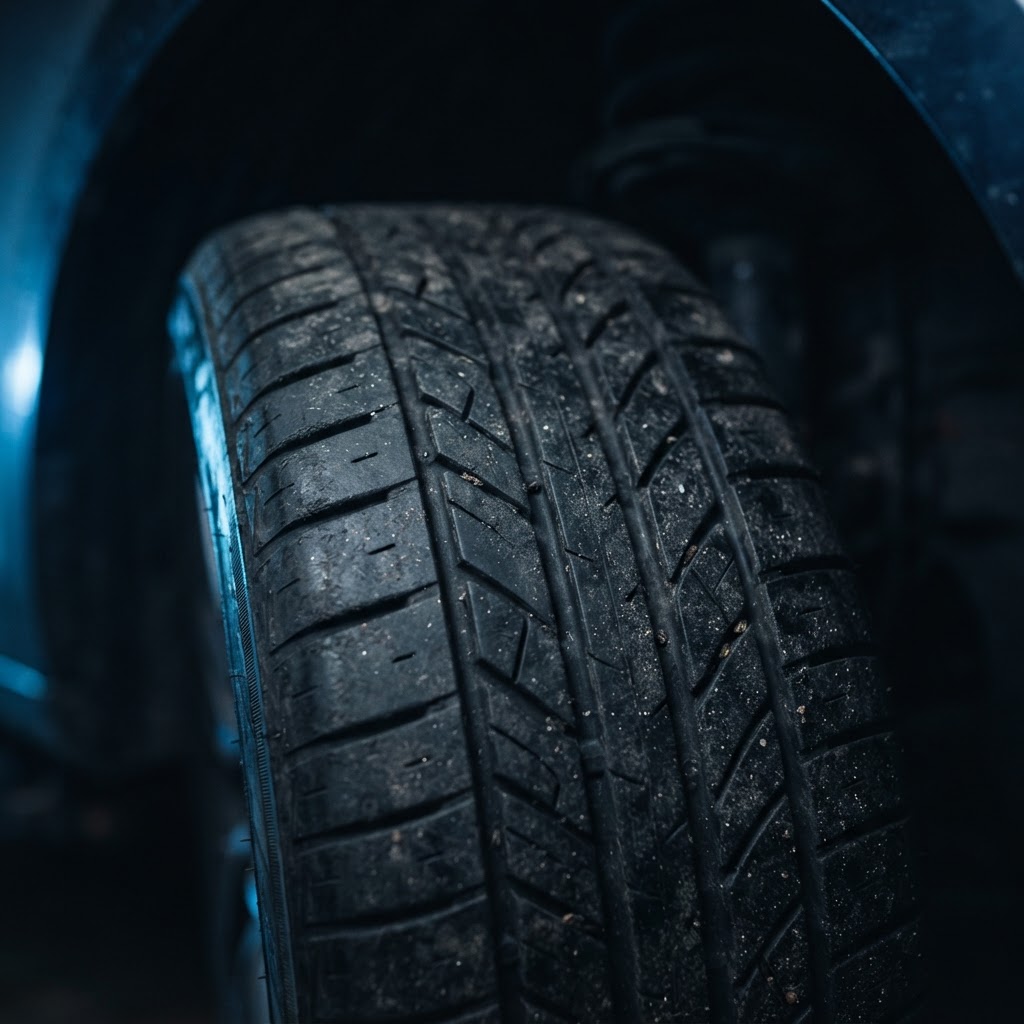
Quick Answer
A tyre tread failure occurs when your vehicle's tyre tread depth falls below the legal minimum of 1.6mm. Tyre tread is the rubber pattern on your tyre surface that provides grip and disperses water. Worn tyres with insufficient tread are a major MOT failure because they significantly reduce your vehicle's ability to grip the road, especially in wet conditions.
The legal limit of 1.6mm is a bare minimum for safety reasons. Most safety experts recommend replacing tyres at 2–3mm to maintain safe braking distances and wet-weather grip.
How to Measure Tyre Tread
The Penny Test
Insert a 1p coin into the tread grooves. If the outer ring of the coin is visible, tread is below legal limit (1.6mm).
Professional Measurement
A garage will use a tread depth gauge to measure precisely. MOT testers use calibrated tools.
Wear Indicators
Modern tyres have wear indicator bars embedded in grooves. When tread reaches these bars (1.6mm), it's time to replace.
Visual Inspection
Visually check all four tyres regularly. Uneven wear patterns indicate alignment or pressure issues.
Causes of Tyre Tread Wear
Normal Wear
Tyres naturally wear with use. The amount depends on driving style, road conditions, and maintenance.
Aggressive Driving
Hard acceleration, sharp cornering, and frequent braking accelerate tyre wear significantly.
Under-Inflation
Tyres that are under-inflated wear faster and unevenly, especially at the edges.
Over-Inflation
Over-inflated tyres wear in the centre, creating uneven wear patterns.
Poor Wheel Alignment
Misaligned wheels cause uneven wear on one or both sides of the tyre.
Heavy Loads
Consistently carrying heavy loads accelerates wear and increases replacement frequency.
MOT Implications
Automatic Failure
Tyre tread below 1.6mm is a major defect — automatic MOT failure.
All Tyres Checked
MOT testers check all four tyres. Even one tyre below the limit causes failure.
Retest Included in Fee
Once tyres are replaced, retesting is included in the initial MOT fee.
Safety Implications
Wet Weather Grip Loss
Worn tyres cannot disperse water effectively. At 1.6mm, braking distance in wet conditions increases by 40%+ compared to 4mm tyres.
Aquaplaning Risk
Thin tread allows water to build up between tyre and road surface, causing aquaplaning and loss of control.
Increased Braking Distance
Reduced grip means longer braking distances in all conditions, especially wet roads.
Blowout Risk
Worn tyres are more prone to punctures and blowouts, particularly on motorways.
Insurance Implications
Driving on illegal or dangerously worn tyres could invalidate insurance claims.
Tyre Replacement Guide
Replacement Intervals
Most car tyres last 25,000–50,000 miles, depending on driving style, road conditions, and tyre quality.
Tyre Costs
Budget £60–£150 per tyre for quality replacements. Fitting and balancing typically costs £15–£30 per tyre.
Tyre Quality Matters
Premium tyres cost more but offer better wet weather grip, durability, and safety.
Matching Tyres
Replace tyres in pairs (front or rear) to maintain balanced handling. Replace all four if replacing high-wear tyres.
Wheel Alignment
After replacing tyres, check wheel alignment. Misalignment causes new tyres to wear quickly.
Repair Urgency
Safety-Critical Issue
Tyre wear directly affects your ability to brake safely and maintain control in wet conditions. Do not delay replacement.
Cost-Effective Fix
Tyre replacement is one of the most affordable MOT failures to fix. Budget £300–£600 for all four tyres fitted.
Plan Ahead
Check tyre tread regularly. Replace proactively at 2–3mm rather than waiting until failure.
How to Prevent Tyre Tread Failure
Monthly Tread Checks
Use the penny test monthly. This takes 30 seconds and catches wear early.
Maintain Correct Pressure
Check tyre pressure monthly. Correct pressure prevents uneven wear and improves fuel economy.
Smooth Driving Habits
Smooth acceleration and braking reduce tyre wear by 10–15%.
Wheel Alignment Checks
Have wheel alignment checked annually. Misalignment causes rapid uneven wear.
Rotate Tyres
Rotating tyres every 6,000–10,000 miles promotes even wear across all four tyres.
Quality Tyres Investment
Premium tyres wear more slowly and provide better safety. They cost more upfront but save money long-term.
Typical Costs
| Repair item | Typical UK cost |
|---|---|
| Economy Tyre (each) | £50–£80 |
| Standard Tyre (each) | £80–£120 |
| Premium Tyre (each) | £120–£180 |
| Fitting & Balancing (per tyre) | £15–£30 |
| Four New Tyres (fitted) | £300–£600 |
| Wheel Alignment Check | £30–£60 |
| MOT Retest | Free–£54.85 |
Related MOT Failure Guides
Frequently Asked Questions
Free MOT Tools
Ste Robinson
Founder, MotR · Last reviewed 9 July 2026
Ste Robinson is the founder of MotR, helping UK drivers check MOT history, tax status, vehicle records and ownership information using official DVLA and DVSA data.
Check Your MOT History & Past Failures
See every past MOT test, advisory, failure and mileage reading — official DVSA data, free in 30 seconds. No signup required.
MOT failure standards sourced from the DVSA MOT Inspection Manual and annual test statistics. Repair costs are UK independent garage estimates, 2026. Always confirm failure items in writing with your test centre.
MOT Failures Hub
Every failure category — statistics, causes, costs and prevention in one place.